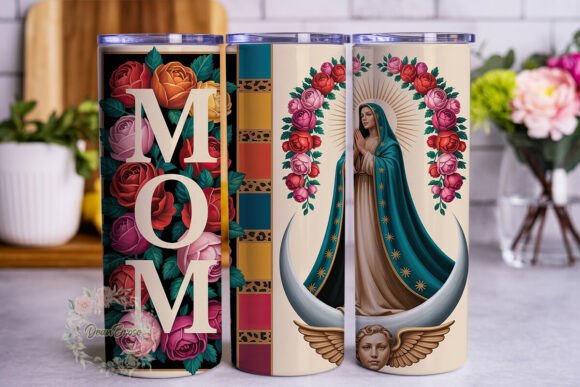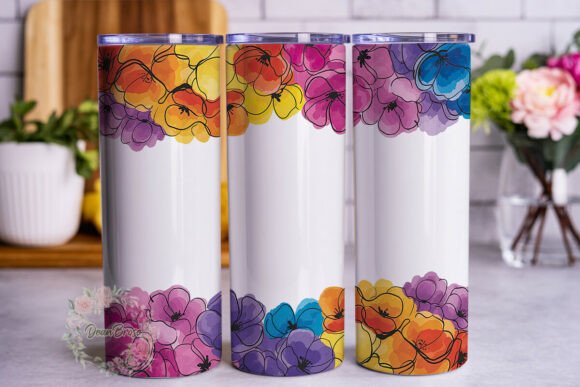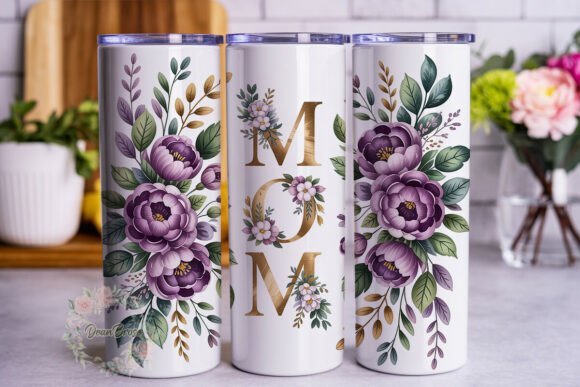
MOM Floral Gold Watercolor 20oz Tumbler Design Review
As a designer who spends more time staring at stitch maps than most people care to admit, I approach every new digital embroidery file with a mix of excitement and skepticism. We have all been there: you buy a beautiful graphic, load it up, and realize halfway through the run that the density is too high for the fabric or the details are lost in the thread bulk. Today, I am taking a close look at the MOM Floral Gold Watercolor 20oz Tumbler design. While this asset is technically categorized under Tumbler Wraps and Graphics, my job is to translate those visual elements into the language of the needle and thread. Does this watercolor aesthetic hold up when converted into a machine embroidery design for real-world products? Let's dig in.
First Impressions: Mood and Aesthetic Potential
The moment I opened the files, the first thing that struck me was the mood. The combination of soft floral elements with gold accents creates a vibe that is both elegant and warm. It feels perfect for spring collections, Mother's Day launches, or boutique branding that aims for a "soft luxury" feel. The layout is generous, with dimensions of 9.3″ x 8.2″, which offers a lot of creative real estate. However, as an embroiderer, I immediately started thinking about scale. This is not a tiny logo; it is a statement piece.
The watercolor style suggests a need for careful thread selection. To replicate that painted look, one cannot simply rely on standard fill stitch blocks. This design calls for a thoughtful mix of satin stitch for the gold outlines and perhaps lighter, more open fills or even running stitch textures to mimic the bleed of watercolor paint. If you are planning to use this for a handmade product, the visual personality here screams "high-end." It is the kind of artwork that elevates a basic item into a personalized gift worth a premium price point.
Real-World Application: Beyond the Tumbler
Although the product title specifies a 20oz tumbler, limiting this design to sublimation blanks would be a mistake for an embroidery business. I recently simulated a project where I adapted this artwork for a heavy-weight canvas tote bag design. The large surface area of a tote allows the floral details to breathe, preventing the stitches from becoming too dense and stiff. Imagine this stitched onto a natural linen tote with cream and gold threads; the result is a stunning piece of wearable art suitable for a farmer's market or a boutique shop product.
Another viable avenue is sweatshirt embroidery. A oversized crewneck in a muted sage or blush pink would provide the perfect backdrop for the gold floral elements. Because the design is high resolution (300 DPI), the source graphic is crisp, which helps immensely when digitizing or preparing the file for stitching. For Etsy sellers looking to expand their catalog beyond simple text monograms, this offers a complex, artistic alternative that stands out in search results. It also translates well to holiday embroidery projects; swap the thread colors for deep reds and greens, and you have a sophisticated Christmas pillow cover or kitchen towel.
Navigating Fabric and Stitch Challenges
Here is where we need to be realistic. A design of this size and detail level demands respect for the materials. If you attempt to stitch this on a thin, stretchy fabric like a standard poly-cotton tee without proper stabilization, you are asking for puckering. The stitch density required to capture the floral nuances can be heavy. My advice? Always test the design on scrap fabric first. Check how the stabilizer holds up under the weight of the thread. For a project like this, a cut-away stabilizer is often safer than tear-away, especially if the finished product needs to withstand frequent washing.
Textured fabrics present another hurdle. If you are stitching on a waffle weave or a thick terrycloth towel, the fine details of the watercolor effect might get lost in the fabric loops. In these cases, consider simplifying the inner fills or using an applique design technique where a base fabric provides the color block, and the machine only stitches the outlines and key details. This reduces bulk and improves clarity on rougher surfaces.
Furthermore, be cautious with dark fabrics. The original graphic likely assumes a light background. If you are stitching on navy or black, you must verify your thread colors provide enough contrast. You may need to add a white underlay or adjust the digitizing to ensure the gold doesn't disappear against the dark background. Small details, like the tiny petals or thin gold lines, require a sharp needle and high-quality thread to prevent breaks and maintain definition.
Commercial Viability and Brand Consistency
For those running a craft business, consistency is key to building trust. Using a cohesive design like the MOM Floral Gold Watercolor 20oz Tumbler across different products—say, a matching set of a tote bag, a tea towel, and a patch—creates a strong brand identity. Customers appreciate when a custom apparel line feels curated rather than random. This design has the versatility to serve as a central motif for a entire collection.
However, before listing items on your shop, you must address the licensing. The product description notes that the download includes PNG files for straight and tapered tumblers and explicitly states no watermarks are included in the downloaded files. It does not, however, specify the license terms for commercial embroidery use. As a professional, I cannot stress this enough: confirm licensing before selling finished items or digital products. Just because you own the graphic file does not automatically grant the right to sell physical goods made from it, nor does it mean the file is already digitized for embroidery machines. You may need to hire a digitizer to convert these PNGs into a proper embroidery file format compatible with your machine.
Final Verdict for Makers and Designers
The MOM Floral Gold Watercolor 20oz Tumbler is a visually striking asset with immense potential for creative entrepreneurs. Its strength lies in its emotional appeal and large format, making it ideal for statement pieces like blankets, large patches, or home decor. However, it is not a "load-and-go" solution for every scenario. Success with this design depends on your ability to adapt it to the constraints of embroidery.
To get the best results, review small details closely. Inspect the corners and curves to ensure your machine can handle the turns without bird-nesting. Test it in black and white mockups to check contrast levels before committing to expensive thread. And always, always consider the end user. Will this embroidered patch or baby embroidery item hold up to play and wash cycles? If you take the time to prep correctly, choosing the right hoop size and stabilizer, this design can become a cornerstone of your portfolio. It bridges the gap between digital artistry and tactile craftsmanship, offering a path to create truly memorable design assets for your clients.