Festive Santa Believe 20oz Tumbler Wrap Review
As a designer who spends more time staring at stitch maps than most people care to admit, I approach every new digital embroidery file with a mix of excitement and skepticism. We have all been there: you buy a design based on a glossy thumbnail, only to find out later that the stitch density is too high for your fabric or the details are lost in the hoop. Today, I am taking a close look at the Festive Santa Believe 20oz Tumbler Wrap. While the product title suggests it is intended for sublimation or printing on Tumbler Wraps, my job is to evaluate how this graphic translates into the tactile world of thread and needle for real-world embroidery projects.
First Impressions: Mood and Visual Personality
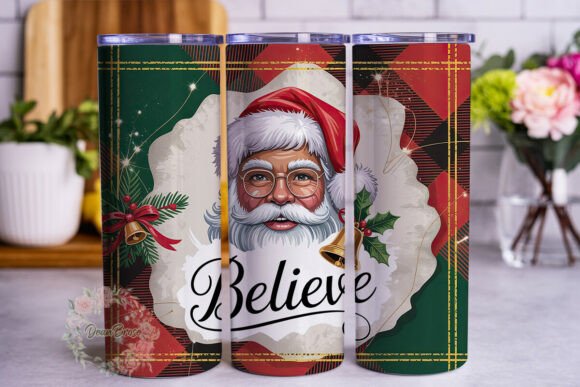
When I first opened the files included in this package—specifically the high-resolution PNGs sized at 9.3″ x 8.2″—the immediate impression was one of classic holiday warmth. The phrase "Believe" paired with a Santa motif creates a nostalgic mood that resonates well with current trends in holiday embroidery. For those of us running a craft business or selling as an Etsy seller, understanding the emotional hook of a design is just as important as the technical specs. This design feels like it belongs on a cozy winter item rather than a sleek, modern tech accessory.
The layout is substantial. At over nine inches wide, this is not a subtle accent; it is a statement piece. In the context of Graphics meant for tumblers, this scale makes perfect sense for wrapping around a cylinder. However, translating this to embroidery requires a shift in thinking. A design of this magnitude demands a large canvas. It naturally leans toward applications like a full-front sweatshirt embroidery project, a large tote bag design, or perhaps a decorative pillow cover for seasonal home decor. The visual personality is bold and inviting, likely to catch the eye of a customer browsing a boutique rack or a craft fair table.
Real-World Application: From Screen to Stitch
Let's move beyond theory and talk about a specific scenario. Imagine you are preparing a custom order for a client who wants a personalized gift for their grandmother. You decide to use the imagery from the Festive Santa Believe 20oz Tumbler Wrap to create a heirloom-quality handmade product. Because the original files are PNGs, you would need to digitize this artwork into a proper machine embroidery design format compatible with your machine. This step is crucial. The clarity of the 300 DPI source file is a great starting point, ensuring that when you trace your stitches, the edges remain crisp.
In a real-life production environment, this design shines on stable, medium-to-heavy weight fabrics. Think cotton twill for an embroidered patch, fleece for a baby embroidery blanket, or a sturdy canvas apron. The "Believe" typography, if intricate, will require careful attention to thread colors and contrast. If you are stitching this onto a dark navy sweatshirt, you must ensure your light-colored threads pop sufficiently to maintain readability. The success of the finished product relies heavily on how well the digitizer converts those smooth graphic lines into satin stitch borders and fill stitch areas that mimic the original art without becoming a block of solid thread.
Technical Considerations and Fabric Compatibility
While the potential is high, there are areas where caution is necessary. The sheer size of this design means it will not fit in a standard 4x4 hoop. You will need access to a machine capable of handling larger hoop sizes, such as a 5x7 or even a 6x10, depending on how you choose to crop or scale the image for your specific custom apparel needs. If you attempt to shrink this down to fit a small pocket on a cap, you risk losing the integrity of the smaller details, especially around Santa's face or the lettering.
Fabric texture plays a massive role here. On textured fabrics like terrycloth towels or waffle knits, fine details can get swallowed up. For a project like a kitchen towel, you might need to increase the underlay or adjust the stitch density to prevent the fabric from puckering. Similarly, stretchy fabrics require a robust stabilizer strategy. Without proper backing, a design of this weight could distort the garment after a few washes. I always recommend testing the design on scrap fabric first. Check how the running stitch outlines behave on curves and whether dense areas cause the fabric to pucker.
Another consideration is the application surface. While the original intent was for a curved tumbler, embroidery on curved surfaces like caps is tricky with large, wide designs. The curvature of a cap brim might distort the horizontal flow of the "Believe" text. For hats, it might be better to isolate just the Santa element or the wordmark, rather than attempting the full wrap composition.
Enhancing Brand Value and Customer Trust
For small shop product owners, the quality of your design assets directly impacts your brand consistency. Using a high-quality source image like the Festive Santa Believe 20oz Tumbler Wrap allows you to create professional-looking printable mockups before you even stitch a single thread. This helps in pre-selling items or building anticipation on social media. When a customer receives a personalized gift that looks exactly like the preview, it builds trust and encourages repeat business.
The visual appeal of this design, when executed well with proper thread tension and clean trims, elevates the perceived value of the item. It transforms a simple tote bag into a boutique-worthy accessory. However, professionalism also means knowing when not to use a design. If the commercial embroidery project requires frequent industrial washing, ensure your stitch types and densities can withstand the stress. Dense fill areas can sometimes become stiff; balancing aesthetics with comfort is key for wearable items like t-shirts or baby clothes.
Practical Notes for the Working Designer
Before committing this design to a final client order, keep these practical steps in mind:
- Verify Licensing: The product description notes the inclusion of PNG files but does not explicitly detail the license terms for commercial embroidery. Always confirm whether you are allowed to sell finished physical goods or if the license is restricted to personal use or digital resale.
- Digitizing Strategy: Since these are graphics, not native embroidery files, pay close attention to directionality. Ensure satin columns follow the natural flow of the shape to maximize sheen and durability.
- Color Testing: Test your thread chart against both light and dark backgrounds. What looks good on white might vanish on black without a border or underlay adjustment.
- Mockup Validation: Create black and white mockups to check for contrast issues. If the design loses definition in grayscale, it may need simplification before stitching.
- Stabilizer Selection: Given the size (9.3″ x 8.2″), do not skimp on stabilizer. Use a cut-away for stretchy garments and a tear-away for stable woven fabrics like denim or canvas.
In conclusion, the Festive Santa Believe 20oz Tumbler Wrap offers a rich, festive aesthetic that, with the right technical approach, can be successfully adapted into stunning applique design work or detailed machine embroidery. It is a versatile asset for the creative entrepreneur willing to put in the prep work to ensure the transition from screen to fabric is seamless. Whether you are making wedding gifts, nursery decor, or expanding your holiday inventory, this design has the visual weight to make an impact, provided you respect the technical limitations of your materials and machinery.