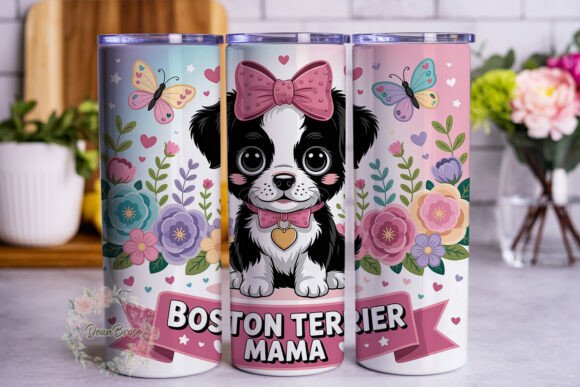
Boston Terrier Dreamcatcher 20oz Wrap: A Designer's Review
As a designer who spends more time staring at stitch maps than most people care to admit, I approach every new digital embroidery file with a mix of excitement and skepticism. We have all been there: you buy a design based on a glossy thumbnail, only to find out later that the satin columns are too wide for the curve of a cap or the fill density turns a soft fleece into a cardboard shield. Today, I am taking a close look at the Boston Terrier Dreamcatcher 20oz Wrap. While the product listing categorizes this under Tumbler Wraps and Graphics, my eye immediately goes to how this artwork translates into thread. Can this high-resolution PNG become a viable machine embroidery design for our handmade products, or is it strictly limited to sublimation?
First Impressions: Mood and Visual Personality
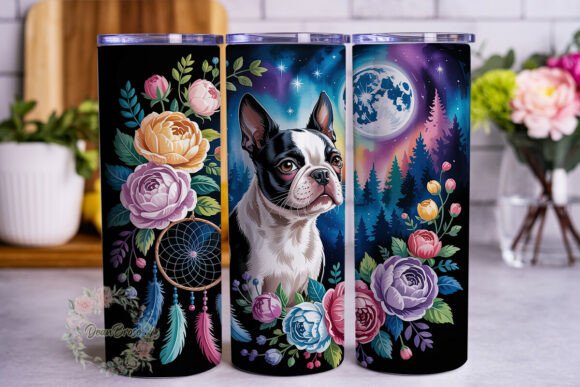
The first thing that strikes me about the Boston Terrier Dreamcatcher 20oz Wrap is its whimsical yet grounded mood. The combination of the iconic black-and-white Boston Terrier face with the intricate webbing of a dreamcatcher creates a narrative of protection and loyalty. Visually, the layout is balanced, utilizing the vertical space effectively within the provided 9.3″ x 8.2″ dimensions. For an embroiderer, this shape suggests versatility. It is not just a square block of stitches; it has flow. The circular elements of the dreamcatcher feathers and webbing offer a natural opportunity to play with different stitch types, from tight fill stitch areas for the dog's fur to flowing satin stitch columns for the hanging feathers.
The detail level appears high, given the 300 DPI resolution mentioned in the specs. However, in embroidery, high resolution in a graphic does not always equal clean stitching. My initial assessment is that this design would shine as a large back piece on a sweatshirt embroidery project or a statement front logo on a heavy canvas tote bag design. The contrast between the dark features of the terrier and the likely lighter background of the dreamcatcher web offers excellent potential for thread colors that pop without needing excessive underlay if digitized correctly.
Real-World Application: From Screen to Stitch
Let's move beyond theory and imagine a real scenario. Suppose you are preparing a custom order for a client who loves their Boston Terrier and wants a personalized gift for a new baby. You envision a soft, minky blanket or a nursery wall hanging. The Boston Terrier Dreamcatcher 20oz Wrap serves as the perfect base artwork here. Because the design includes organic shapes like feathers and webs, it allows for creative interpretation. You could use a metallic thread for the webbing to simulate the "dream" aspect, while keeping the dog's features in matte cotton threads for realism.
For Etsy sellers and craft business owners, this design fits well into the "pet lover" niche, which is perpetually strong. If you are selling custom apparel, this graphic could be adapted into an embroidered patch. Patches are a fantastic way to utilize detailed graphics like this because you can stitch them on stable twill before applying them to stretchy garments. This mitigates the risk of distortion. Imagine these patches on denim jackets or backpacks; the dreamcatcher theme adds a boho-chic element that elevates the product from a simple dog portrait to a lifestyle statement.
However, we must address the format. The product includes PNG files intended for tumbler wrapping. To use this for commercial embroidery, you will need to digitize it or have it digitized. This is a crucial step. A direct print-to-stitch conversion rarely works well for complex art. You need to define your stitch density carefully. The fur on a Boston Terrier requires careful directionality in the stitching to look natural, whereas the dreamcatcher web needs a consistent, open fill to avoid puckering.
Technical Considerations and Fabric Challenges
When adapting the Boston Terrier Dreamcatcher 20oz Wrap for embroidery, fabric choice is paramount. If you attempt to stitch this directly onto a thin, stretchy t-shirt without proper stabilization, you risk ruining both the garment and the design. The dense areas of the dog's black fur can cause pulling if the stabilizer is insufficient. I strongly recommend using a cut-away stabilizer for any garment that will be washed frequently, such as a baby embroidery item or a daily-wear tee.
Curved surfaces present another challenge. While the original graphic is designed for a 20oz tumbler (which is curved), embroidery on a actual curved surface like a baseball cap is difficult. The 9.3-inch width is likely too wide for a standard cap hoop. If you plan to use this for headwear, you will need to scale it down significantly or focus on just the central dog motif, sacrificing some of the dreamcatcher details. Small hoop sizes simply cannot accommodate the full breadth of this artwork without compromising the integrity of the outer feathers.
Furthermore, consider the fabric texture. On a textured towel or a waffle-knit apron, fine details like the tiny beads often found in dreamcatcher designs might get lost or sink into the pile. In these cases, simplifying the design by removing micro-details and focusing on bold outlines is a smarter move for the finished product. Always test the design on scrap fabric first. Check how the black threads look against dark fabrics; you may need to add a white underlay or a border to ensure the silhouette remains distinct.
Enhancing Brand Value and Customer Trust
In the world of small shop product creation, consistency is key. Using a high-quality base graphic like the Boston Terrier Dreamcatcher 20oz Wrap allows for brand consistency across different items. Whether you are making a pillow cover, a kitchen towel, or a holiday ornament, the core image remains recognizable. This recognition builds customer trust. When a buyer sees a crisp, well-executed embroidery job, they associate that quality with your brand.
The visual appeal of this specific design lies in its emotional connection. People do not just buy embroidery; they buy the feeling of warmth and personalization. A well-stitched version of this design signals professionalism. It tells the customer that you care about the details, from the smoothness of the satin edges to the coverage of the fills. This attention to detail justifies a higher price point for your handmade product.
For those creating printable mockups to sell digital assets or preview custom orders, the 300 DPI resolution is a significant asset. It ensures that your marketing materials look sharp on social media and your website. Clear, high-quality images drive buyer engagement and can be the difference between a scroll-past and a sale.
Final Verdict and Designer Notes
The Boston Terrier Dreamcatcher 20oz Wrap is a compelling graphic with strong potential for translation into embroidery, provided the necessary technical steps are taken. It is not a plug-and-play embroidery file in its current PNG state, but rather a superior source image for digitization. Its strength lies in its thematic depth and balanced composition.
Before committing to a production run, keep these practical notes in mind:
- Digitizing Strategy: Do not auto-digitize. Manually set stitch angles for the fur to follow the contours of the dog's face.
- Color Contrast: Test your thread chart. Ensure the black of the terrier stands out against the background fabric, especially if using navy or charcoal garments.
- Licensing Check: Since this is sold as a graphic for tumbler wraps, confirm the licensing terms before selling finished embroidered goods. Some graphic licenses restrict commercial embroidery use.
- Scale Appropriately: Remember the 9.3″ x 8.2″ dimension. Ensure your hoop size can handle this, or be prepared to resize, which may require simplifying small details.
- Mockup Testing: Create black and white mockups to check value contrast before threading the machine.
In conclusion, for the creative entrepreneur willing to invest time in proper digitization and testing, this design offers a unique avenue for creating memorable, high-value items. It bridges the gap between trendy home decor and heartfelt pet portraiture, making it a worthy addition to your library of design assets.